How and When to Harvest your Grapes
The timing of the grape harvest is one of the most important decisions you’ll make as a winemaker. Harvesting too early or too late can result in wine that doesn’t have the right balance of sugar, acidity, and flavor. In this lesson, we’ll guide you through how to determine the best time to harvest your grapes, the tools you need, and the steps to follow for a successful harvest.
1. Why Timing Matters:
The timing of grape harvest is all about balancing three key factors:
-
Sugar Levels (Brix): Grapes need to have the right amount of sugar for fermentation. Too little sugar, and the wine will taste thin; too much sugar, and the wine might be overly alcoholic or have an unbalanced taste.
-
Acidity: Acidity helps preserve the freshness of the wine and is crucial for structure. If you pick the grapes too early, they might be too acidic. If you wait too long, the acidity will drop, and the wine could be too flabby.
-
Tannin and Flavor Development: Especially for red wines, tannins (from the skins) and flavor compounds develop throughout the growing season. You want to wait until the skins have fully ripened to avoid harsh, green flavors.
2. The Right Time to Harvest:
So, when exactly should you harvest your grapes? There are a few key indicators to watch for.
a. Sugar Levels (Brix)
-
Brix is the scale used to measure the sugar content in your grapes. You can use a refractometer to measure this. Most grapes are harvested when the Brix level is between 18-25, depending on the style of wine you’re making.
-
White wines: Typically harvested at around 20-22 Brix.
-
Red wines: Typically harvested at around 22-25 Brix.
-
b. Acidity (pH Levels)
-
As grapes ripen, their acidity decreases. Generally, you want the pH of your grapes to be between 3.0 and 3.5 for most wines. Higher acidity is desirable for fresher, crisper wines (think white wines), while slightly lower pH is fine for reds, which need more complexity.
c. Tasting the Grapes
-
The Taste Test: Take a few grapes from different parts of the vine and taste them. Ripe grapes should have a balanced taste of sweet (sugar) and tart (acidity). The skin should not taste bitter or astringent, and the pulp should be juicy.
-
Seed Ripeness: For reds, check if the seeds are brown or green. Brown seeds mean the grape is more fully ripe, while green seeds might indicate an under-ripe grape that could give the wine undesirable, bitter flavors.
d. Color and Skin Ripeness
-
For Red Grapes: The color of the skins should be deep and rich. They should also feel slightly softer when you squeeze them.
-
For White Grapes: The skins should be more translucent and golden, indicating a good level of ripeness.
3. Tools You’ll Need:
Having the right tools will make the harvest process smoother and more efficient.
a. Pruning Shears
-
Sharp pruning shears are essential for cleanly cutting the grape clusters from the vine. This prevents crushing the fruit and damaging the vines.
b. Harvest Bins or Containers
-
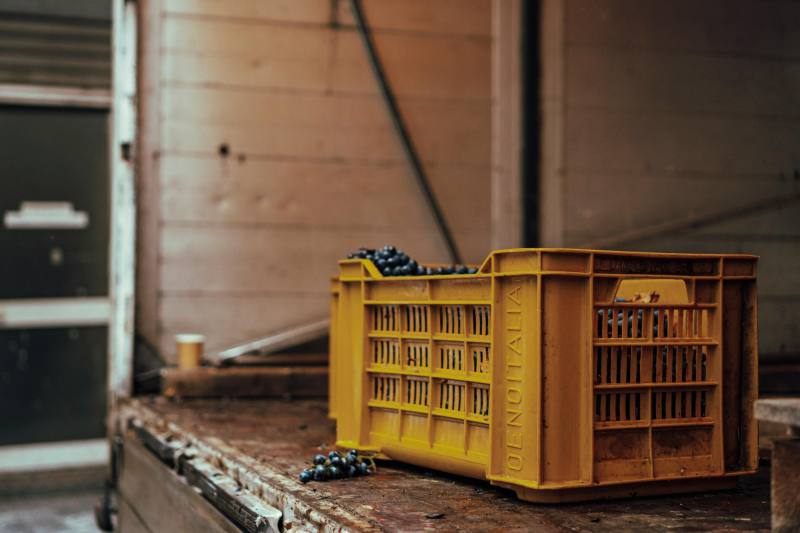
Use clean, non-porous bins to collect your grapes. Plastic or wooden bins are fine as long as they are clean and free from any previous wine residues, which could affect the grapes’ integrity.
c. A Brix Refractometer
-
This tool helps measure the sugar content of the grapes. It’s a small, handheld device that gives you an accurate reading, and is a must-have for serious winemakers.
d. Gloves and Protective Clothing
-
Grapes can be sticky, so gloves will help keep your hands clean. Plus, it’s best to wear comfortable, weather-appropriate clothing because harvesting can take several hours.
4. The Harvesting Process:
Once you’ve determined that your grapes are ripe and ready for picking, here’s how to harvest them:
Step 1: Choose the Right Time of Day
-
Harvesting is usually done early in the morning when the temperatures are cooler, as this helps preserve the freshness of the grapes and keeps the sugar levels stable. Avoid harvesting during the hottest part of the day when the fruit can be stressed.
Step 2: Inspect the Vines
-
Before starting, walk through the vineyard and inspect the vines. Check for any rot, disease, or overripe grapes. Remove any damaged or undesirable fruit to ensure your final harvest is of the highest quality.
Step 3: Cut the Clusters
-
Using your pruning shears, cut the clusters of grapes from the vine. Be careful not to crush them as you harvest. Cut near the main stem, leaving a small part of the cluster stem attached to the grapes. This helps reduce the risk of spoilage during transport.
Step 4: Handle the Grapes Gently
-
Once the grapes are harvested, handle them carefully to avoid bruising. The fresher the grapes, the better the wine.
Step 5: Transporting the Grapes
-
Transport your grapes to the winemaking facility as quickly as possible. If you’re not immediately pressing them, keep them cool and out of direct sunlight.
5. What Happens if You Harvest Too Early or Too Late?
a. Too Early (Under-ripe Grapes)
-
Grapes harvested too early may have high acidity and low sugar content. The wine might taste harsh, overly tart, or “green.” In extreme cases, under-ripe grapes can result in poor fermentation or off-flavors in the wine.
b. Too Late (Over-ripe Grapes)
-
Harvesting too late can lead to overly ripe grapes with too much sugar, which can result in a wine that is too alcoholic, lacking in acidity, and possibly flat in flavor. Overripe grapes are also more prone to rot.
6. Conclusion:
Harvesting grapes is a skill that improves with experience, but by keeping an eye on key factors like sugar levels, acidity, and grape flavor, you’ll be able to choose the best time to harvest your fruit. With practice, you’ll develop an intuitive sense for when the grapes are at their peak, and your wines will thank you for it!
Pro Tips:
-
Do a test harvest: If you’re unsure whether to harvest, pick a small section of the vineyard and test the sugar and acidity levels. It will help you understand whether it’s time to pick.
-
Listen to the vineyard: Each vineyard is different. The climate, the grape variety, and the vineyard’s specific microclimate can all affect the timing. Trust your instincts and the characteristics of your grapes.